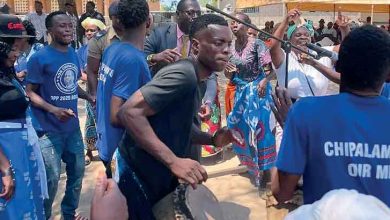
With Malawi’s debt hitting almost K17 trillion, stakeholders at the National Dialogue on Financing for Development held in Lilongwe yesterday took turns to figure out how such a huge sum has been utilised to develop the country.
They noted that the debt, coupled with corruption and conditions by international lending institutions like the World Bank and International Monetary Fund (IMF), have paralysed public service delivery, much to the detriment of the poor.

The discussion was held under the theme ‘The impact of IMF and World Bank conditionalities or austerity policies and debt stress on public service delivery with focus on education and health sectors’.
Organised by the Universal Health Coverage Coalition (UHCC), ActionAid Malawi (AAM), Partners in Health and AHF Malawi, the debate emanated from ‘The Human Cost of Public Sector Cut in Africa’ report which AAM did in six countries including Malawi.
Setting the ball rolling, Principal Secretary responsible for reforms in the Ministry of Health Matthias Joshua said the debt situation was worrying as 27 percent of the national budget goes towards debt repayment.
Malawi in a fix
During a panel discussion, Political Science Association of Malawi president Henry Chingaipe said Malawi was in a fix, as it was borrowing money to train healthcare workers and teachers, but due to conditions by the IMF, it cannot employ them all.
With wage cap conditions, he said the government cannot even promote workers on time as that would lead to increased salaries, which leads to drug pilferages in health facilities.
Said Chingaipe: “I ask myself, did we get into this debt crisis by accident? What have we done with the money borrowed this far? Have we been prudent enough with the money we have been borrowing?
“We keep borrowing and I am afraid that not long from now, the percentage of budget repayment may hit 50 percent.”
On health, Association of Malawian Midwives president Keith Lipato said facilities are now failing to provide women with lignocaine, a drug that eases pain during delivery because of lack of resources.
He said: “Because of these huge debts very little is trickling to the health sector. We are being forced even to tell patients to buy plaster of Paris and other drugs because we don’t have them.
“Let’s be honest! How much is spent locally when the President is travelling? Where is money from toll gates going? How do you expect hard work from a nurse who gets K5 000 for working for 12 hours at night?”
Corruption worsening situation
Chingaipe, who was part of the Presidential Taskforce on Public Reforms, said the group had unearthed serious levels of corruption and wastage of resources.
“For instance, we discovered that sometimes they would buy medicine that is not needed, wait for them to expire and hold a ceremony to burn them. Text books provided by the World Bank for public schools ended up in private schools,” he said.
Civil Society Education Coalition executive director Benedicto Kondowe shared insights on how the education sector is also facing challenges including failure by the central government to provide budgeted resources to the sector.
What now?
Panellists suggested the need for multilateral lending institutions like IMF to cancel debts while at the same time urging the government of Malawi to borrow cautiously.